Monday, May 23, 2011

Yeah, but can she cook?

Three things crossed in my head yesterday that all point to the same problem, one that isn’t obvious at first but is troubling.   The first  is the conclusion of Brit cook and TV star, Jamie Oliver that the essential reason for the lousy food school children get in most American and British schools is that the schools don’t have enough people in the kitchen to really cook anything.  As  budget pressures mount, the schools  cut kitchen staff to the minimum.  The result is they only have enough people to open cans and bake or microwave frozen entrees and side dishes.  The do not have the kitchen staff to actually cook a school meal.  Oliver pointed out this often isn’t actually cheaper than cooking meals from scratch. The processed and prepared food they feed the students tended to be very high in salt, sugar and industrial sweeteners and fats.  Even when they served fruit and vegetables, they were usually frozen (not necessarily a bad thing, especially in winter) or preprocessed.

The second stray item was in this weekend’s Washington Post, where Kathleen Parker wrote about the sharp increase in obesity, especially among children.   As a throw away line, pointing out her own shortcomings she wrote, “And though I tried to provide family dinners most nights when the kids were small, I told my son when he left for college: ‘“You’re gonna miss my takeout.”’  

The telling point here is that even for a  traditional family,  everyone sitting  round the kitchen table for the evening meal is not common today.  Time pressures with two working parents and children with after school sports and other activities make  a family dinner  around the table  an exception not the norm.  While I’m sure Kathleen Parker is a good cook, take out is often for dinner at her house  for lack of time to purchase, prepare, and cook a traditional  dinner many nights.

While lack of time to cook  undermines the family dinner  for Kathleen Parker’s family,  another  even more troubling  problem  is  that many people who have the time to cook family meals,  don’t actually know how to do it.  Last week on the way home from the San Fernando Valley I stopped at the Ralph’s Market on Ventura Blvd. in Studio City, an up scale LA suburb.  I needed  the usual mid week shopping stuff:  milk, bread and salad greens.  I didn’t even need a cart and got in line with my black basket behind a thirty something women with a cart full of everything.

She was slim well dressed  and intelligent looking, apparently a stay at home mom.  From the large load of groceries it was clear she had a couple kids and a husband.  As she loaded the belt on the check stand, I noticed that she was careful to avoid most “junk” food, even the  breakfast cereal was not sugary.  Much of what she bought was “organic.”  She obviously sent lunch with her kids from the amount of precut apples and carrots in little single serving sealed bags and little cups of fruit.  She bought chewy dark multigrain bread, organic peanut butter, sliced Muenster cheese and a  big cans of tuna.   The rest of the cart was frozen itemd:  entrees, side dishes and vegetables in this or that sauce.

Then it hit  me as the clerk rang up close to two hundred dollars of groceries.  This obviously intelligent, affluent and serious lady didn’t know how to cook.  Except for a bag of oranges,  she had not  bought any of raw or basic ingredients. No onions or potatoes, no rmeat, no fresh raw fruit or vegetables, no spices, canned tomatoes, raw dried grains or beans, nothing fresh except two dozen organic free range eggs.  (I’m sure she could scramble or hard boil eggs but that is a long way from actually being a  cook.)  Even the main courses were preprocessed and prepared outside her kitchen.

This woman’s shopping cart  demonstrates the same essential problem Jamie found in school kitchens,   no knowledge or skill in cooking beyond a few very simple things.  Like the schools, this lady knew how to micro wave  meals but not how to cook them herself.  She paid almost three time the cost of making a pot roast from scratch for a prepared one along with the potato and vegetable side dish.   I  bring this up because at spice firms like Laury’s offer  pot roast seasoning and easy to follow instruction.  McCormick’s even has what amounts to a “Pot Roast for Dummies” kit with seasonings a roasting bad and simple instructions.  All the lady had to do was buy a fresh chuck roast and a kit, put the meat in the roasting bag with the seasonings, a little wine and she could have made a pot roast.  She could have bought three pounds of potatoes and  two pound of carrots or broccoli and made the two side dishes.  She also bought bagged prepared salads that included the dressing.  Why not buy a head or two of lettuce, a bottle of wine vinegar and one of olive oil and make her own salad at less than half the cost of the prepared one?

In my neighborhood there are many immigrant families from a  dozen counties near and far.  These people buy basic raw or simple ingredients and go home and cook them.   Why?  Because their mothers and grandmothers taught them how to cook.  No big deal you would think, but I’m afraid it is a big deal.  It is not just an affluent woman from Studio City but it includes many if not most young men and women. They don’t know even simple cooking.  In high school my brother Michael and often made dinner when my recently widowed mother was at work.  She and our grandmother taught us enough to make simple family dinners.  We didn't need Rachel Ray,  although I have to say that she is very good at showing ordinary people how to prepare and cook good dinners.

This is  ignorance of how to cook even simple meals is problem for all Americans.  It is not the fault of McDonalds or Kentucky Fried Chicken, or any other  food company.  It is our fault. These firms are filling in the gaps individual families make for reasons of necessity or connivence.  It doesn’t have to be this way and it shouldn’t be this way.  As fewer and fewer of our children are raised without a traditional family,  ignorance about cooking is just one of negative consequences.

“We got a problem in River City, right here in River City” as goes the pitch from “The Music Man.”


Tuesday, May 17, 2011

Bourdain is correct in his judgement of Red's Java House.

Reading on Yelp for San Francisco I noticed many of the comments about Red's Java House  are either unfair or uniformed, if not both.  The hamburgers here are made and served in the old local style, on a sliced slab of sourdough bread.  As a native of SF I should remind younger readers that before the rise of national burger chains each region had its style.  Red's is true to the local style of Burgers that developed in the Bay Area long before there were national chains and locals felt any need to conform to some outsiders standards.

In the San Francisco Bay Area most places popular when I was in College in the the early 1960’s served large hamburgers on slabs of a sourdough  loaf or on a sour dough roll.  They were not “dressed” to use the New Orleans term with a lot of toppings and garnishes but often served with only the meat in the sourdough and any condiments left to the buyer to add or they were served with maybe fresh or grilled onions, perhaps a hint of mayo and even more rarely with a few dill pickle slices.  

For those who can remember, all the various “Joe’s” restaurants which go back to the early years of the the twentith century made burgers this way as did many other restaurants like the beloved Larry Blake's on Telegraph in Berkeley which served their big burger with a side of very very garlicky Caesar Salad not fries.  The burgers in the bay area were made like Italian style sandwiches and only cheap hamburger stands and some diners and cafeterias used the common small hamburger bun in one form or another.

Even family owned pizza joints and small local chains like Round Table Pizza made their burgers this way, on French rolls just like their other sandwiches.  The choice was a hamburger with or without cheese or  a sausage split and grilled with your choice of a Polish kilbasa, a Louisiana Hot link or Linguiça served in the same dressed french roll.

In LA hamburgers were served fully dressed with thousand island dressing, onions, tomato slices, whole lettuce leaves and pickles or relish and a dab of mustard and catsup. In LA this system of “dressed” hamburgers applied even if they were  covered in a generous glob of chili or if sliced avocado or a thick guacamole was added.  Midwestern and East Coast folks still disparage these California "salad in bun" Southern California hamburgers, but that is and was the authentic local style and it remains so.

The burger at Red’s Java House is very authentic old time Frisco, not something odd nor a national standard burger or one of the hyped “gourmet” super burgers that are popular and go for something between ten and twenty bucks.  Anthony Bourdain was correct in his judgment, favoring as he often does a strong authentic local tradition while at the same time also recognizing innovations that build on it.  That he dings some of the more extravagant or mystical contemporary trends is OK with me.  Perhaps he realized that may of the new local and organic savants are in fact going back to what  my grandmothers and other women who learned to cook before WW I knew and did.

My comment is this, before you stick you nose up at something old and authentic, get your facts straight and learn the local traditions and customs.  San Francisco and the Bay Area had good cooks and a special authentic style long before  the mystical organic folks arrived and rediscovered good and local ingredients.  In many ways it was the old authentic local traditions that allowed this movement to grow up and flourish.  However, as Bourdain makes clear it is only one of many schools of cooking and one that exists on the higher levels of restaurants and cooks.

Sad news.

On a new post on Yelp,  one of the previous reviewers has posted that the Portuguese
Grill in Rancho Cucamonga closed last week.  It is a very sad thing and my best wishes go to the family that ran the small restaurant.  As I wrote, it was like in a Portuguese American home with so many of the wonderful dishes I remember from my growing up in large extended family with many fine cooks.

Perhaps some one could buy it and bring it back.  The unique barbecue/grilling system they installed is something that could be used for many styles of cooking.

Friday, March 25, 2011

The Portuguese Grill


The national flag of Portugal

The common wisdom has it, quoting the great southern novelist Thomas Wolfe, “You can't go home again.” While it is true, every once in a while you find yourself in an unexpected and nostalgic place where a wisp of a long forgotten aroma brings back memories, old deep memories. That happened to me not long ago and an improbable place, a small shopping center next to an Albertson and a Shell Station in Rancho Cucamonga, about fifty years and four hundred miles south of the memories it evoked. The place was a small family owned and run restaurant. As often can happen especially with ethnic food, these little places prepare and bring us fair and accurately served food from the family’s oldest traditions.


The regional flag of the Açores

The restaurant I writing about is the Portuguese Grill. For me it was stepping back fifty years to the kitchens of my Grandmother and her sisters and sisters-in-laws. This is not the sort of cooking you would find in a hip or contemporary restaurant, it is cooking you would find in a traditional Portuguese home, something that was all around and familiar when I was young, but only makes a reappearance occasionally at large family gatherings that only happen once or twice a year.

Whole dried cod orBacalhau or Lutefisk

This welcoming small brightly tiled little restaurant and take out is decorated with big color pictures of contemporary Portugal and has on the wall both the Green and Red Portuguese national flag and the blue and white regional flag of the Açores islands -- the ancestral homeland of most Portuguese Americans. They have an oak and hard wood fire grill and make a full range of very good and authentic home style dishes. Right off the bat, the starters are familiar and welcoming: Croquettes of potato, herbs and salt cod. Bacalhau is the word for salt cod, what Norwegians call Lutefisk. You can sometimes see and smell it, or at least you used to see it, in ethnic markets, three foot long whole salty white stiff bacalau piled up like firewood. It is traditional in Italy, France, Iberia and the Americas including the English speaking West Indies. It is the ancient staple of Portugal, where it is often called “our old friend.”

Additionally they have fresh small and medium size sardines and mackerel. They are served deep fried and eaten whole. The large sardines and the mackerel are grilled on the oak coals and dressed lightly with olive oil and vinegar with slices of onion and a few herbs. They make linguiça sandwiches which are knock outs: the linguiça is grilled and served in a homemade roll with sautéed peppers and onions. The linguiça is made in Tracy by people from the Açores. It is a sausage of relatively large chunks of pork first marinated then spiced and stuffed in natural casings and finally smoked. It is a cousin of Basque Chorizo, Cajun Andouille and Mexican or Filipino Lorganitza. It is not the stuff sold in super markets, where standard pork sausages are manufactured by adding the approximate ethnic herb & spice mix to a common pork base and then called kilbasa, bratwurst, Italian sausage, chorizo or Louisiana Hot's even though they are really all but identical.

The main menu features fish, chicken, pork, beef and linguiça grilled on the oak coals. The live fire grill is an unusual barbecue system, it has rotating double grills which mean that the meat and fish are barbecued while moving constantly as if they were on a spit. This allows an even cooking and permits the kitchen to barbecue even small delicate fish that would be quickly incinerated on a normal grill. The beef is marinated in red wine vinegar herbs and spices and grilled. The skirt steak was rare, tender as prime cut and came with a big pile of crisp home make fries. It scored 11 on a 10 point scale. Amazing. The grilled chicken was tangy, crisp on the outside and moist inside. The pork ribs were perfect and not coated with some gooey sweet sauce.

They also make an dressy Lisbon style steak topped with a sauce of the pan juices deglased and enriched with cream and brandy and a sunny side up egg -- something very like the dressed up steaks of Argentina and Chile. As you expect there are a number of main dishes based on salt cod that are loved by the Portuguese and worth a try if you are not connected to Lusitanian cooking. Finally they offer a rare specialty, Polvo Estufado, a flavorful and unusual octopus stew which is worth the trip to Cucamonga if you know it. It is a very rarely found Portuguese favorite. If you are frightened off, I should refer you to Anthony Bourdain who is a fan of this dish ever since he first tasted it as a teenager in little Portuguese places on Cape Cod.

They offer a short but balanced list of Portuguese reds and white and rose wines. All are priced very fairly priced and combine seamlessly with their food. The reds are very fruity and rich in the unique local tradition. Finally, the family that owns and run this wonderful little place make bread, bread as you would only find at home. The loaves are about ten inches round and six inches tall with a dark semi crisp crust. Cut in slices the bread is yeasty, chewy and so authentic it almost brought tears to my eyes. After a meal here you can almost hear the words and melody of “In a Portuguese House.”

Portuguese Grill 11368 Kenyon Way # G
Rancho Cucamonga, CA, 91701
Phone : 909-945-9444

 http://www.portuguesegrillrestaurant.com/

It is just off the Foothill Freeway west of the junction with I-15. The web site has easy to follow maps.

Thursday, August 12, 2010

A long 'Wich list.

Here is an incomplete list of other important ‘Wiches:


1. The Ruben. This is the pride of New York and rich beyond any sane red line for both salt and cholesterol overdose.


2. The Peanut Butter and Jelly. The kids favorite but adults can have “cosmic” organic one favored by Jerry Brown in his first term or the one with bananas that Evlis loved.


3. The New Orleans Po’Boy. The most famous is the oyster Po’Boy, but they make all sorts of variations and combination.

4. The muffaletta is the other unique Big Easy specialty of Italian cold cuts and olive salad on special round Sicilian loaves. Unlike most sandwiches this one tastes best if you allow it sit undisturbed for at least four hours up or even over night so the pungent olive salad murges all flavors with the cure meats and the crusty bread.


5. The Sloppy Joe was invented in Key West saloon of the same name. It is a favorite with kids and was a staple of school cafeterias in my youth. It is still beloved in the Midwest. This is another blue collar item usually sniffed at by the Foodies and Restaurant Critics because it is messy and simple.


6. The New England Lobster Roll. This simple lobster salad on one of the funny u-shaped Boston hot dog buns. It is a local icon

7. A Chicago Dog. This is the apotheosis of the hot dog. On a fat oval sesame seed bun it is a quarter pound Kosher dog accompanied by a pickle spear, neon green sweet pickle relish, chopped onions and a couple unique local pickled “Sport Peppers” that are about as long as your little finger, Chicago mustard, tomato slices and maybe a little sauerkraut too. A final shake of celery salt is considered the authentic Chicago touch.


8. El Cubano. This Havana & Miami specialty is a pressed ‘wich of ham, cheese and sliced garlicky roast pork. A great ‘wich. The night time variation on sweet egg bread is called the Medianoche. Cuban places also make a ‘wich stuffed with Ropa Vieja, a cuban variation on beef pot roast.


9. A Philly Cheese Steak. Legendary.


10. A Chicago “Italian Beef” ‘wich. Bigger and a lot messier and spicier than a Philipe’s French Dip in LA. Chicago sandwiches tend toward extravagant excess making the Windy City the Vegas of the sandwich world.


11. A St. Paul ‘wich. A midwestern specialty it is essentially a fried egg ‘wich on plain white bread and for some reason a specialty at Chinese and other asian style places. Some say it is Egg Foo Yung ‘wich, others seem to think it is a Chinese Take out’s version of an Egg McMuffin.


12. The grilled cheese. It also had an upscale relative, the grilled ham & cheese. In my opinion you must spread some mustard on the underside of the top to give it a bite.


13. Carolina pulled pork. Smoked tender pork on white bread with a vinegar based BBQ sauce.


14. A Texas brisket ‘wich. The pride of Texas is the tender juicy slow roasted and smoked beef brisket. On white bread with or without a BBQ sauce.


15. The Santa Maria Tri tip ‘wich. Cooked on a live fire of oak wood, this is medium rare beef on a french roll usually with a medium salsa over the meat. Don’t slice it too thick.


This list is almost endless and I am sure any reader could easily add half a dozen other unique sandwiches without any effort at all. For example, Canadians could add a Montreal Smoked Meat sandwich that is made with a varity of meats ranging from beef all the way to Moose.

All photo's are from Wikepedia and in the public domain.

Wednesday, August 11, 2010

The 'wich list, No. 1

In no particular order are a list of sandwiches, some on the eccentric side, that I would like to have again.

1. The Summer ‘Wich.

Take about eight inches of a sourdough batard and slice it in half lengthwise. Slice one large or two medium homegrown tomatoes, cut a couple slices from a sweet flat or torpedo shaped red onion and take a couple leaves of butter lettuce. Now spread mayonnaise on the bottom slice of bread and put the tomato, onion and lettuce on it and put a shake of salt and a grind of black pepper on it then cap with the other half of the bread, squeeze it together but not too hard then cut it in half. You can make this an old county style sandwich by drizzling good olive oil and red wine vinegar in stead of the mayo. Serve with mild pickled banana peppers and home made lemonade.

2. The Blue Collar Diner ‘Wich.

Rarely seen in California, this long time blue collar favorite is still made and enjoyed in the Midwest. Cut two or three quarter inch thick slices of high quality baloney depending on the diameter of the roll. A high quality baloney, a German style (white) baloney, a Kosher baloney or best of all Lebanon Baloney from the Pennsylvania Dutch country all work, although each has it’s own savory salty flavor. Now fry the baloney slices until they are brown but stop before they get crisp. Take a couple slices of rye bread and lay on a heavy spread of a brown Chicago style mustard like Gulden’s. That is the only condiment. Pile the grilled slices on the bread and put the top slice of bread on it and slice in half. That’s it. This is simplicity itself and a robust sandwich fit for breakfast, lunch or dinner, especially in the winter.

3. The Chicken ‘Wich.

This is what you do with the left over roast chicken from the night before. Take the carcass of the bird and cut enough slices large and small to make a sandwich, include any skin left on the bird. Now take two slices of a chewy whole wheat or multigrain bread and spread a light layer of mayonnaise on each. Pile on the chicken, cover with a couple leaves of lettuce, watercress or any other green you have on hand, put the top slice of bread over it and cut into half.

4. The Cold Turkey ‘Wich.

This is essentially the same as the Chicken ‘Wich above except you take slices of both white and dark turkey meat. However on the top piece of bread you spread on a layer of whole cranberry sauce and a thin layer of turkey dressing. Serve this anytime, although you must served it during the three day non stop orgy of TV football games that follow Thanksgiving day.

5. A Golden Gate ‘Wich.

This is the Bay Area traditional variation on the Hamburger. First you chop an onion into small pieces then you mix them into the raw hamburger meat before shaping the burgers. The preferred shape is not the round patty, but an oblong potato shape. Grill the meat over high heat so the outside is crusted while the interior is medium to medium rare. Take a six to eight inch slice of sourdough batard and cut it in half lengthwise. Scoop out about half the inside of the top piece to allow the oblong burger to nest into the bread. This is best when a layer of chili sauce is spread over the meat although some people prefer ketchup and a few use a steak sauce like A-1. If you want cheese, I’d recommend some provolone or swiss. A pickle spear on the side can be added if you prefer but this is a spartan item and should not be “dressed” up like an ordinary hamburger.

Saturday, May 8, 2010

Deviled Eggs & Egg Salad: boring but a blank canvas for something bold or bright.

One of the basic American nibbles is the deviled egg. Generally it is a pretty bland item on the table of cold appetizers. So is it’s chopped up form, egg salad. You can shrug and ignore it, or you can put your imagination to work and make something out of it.

Basic Deviled Eggs: Boil six eggs, shell them, slice them in half and pop the yokes into a small bowl. Add to the yokes: a quarter cup of mayonnaise, a teaspoon of mustard, a grind or two of white pepper and a pinch of turmeric to hype the yellow color Mash and combine all the ingredients into a paste, put into a pastry bag or into a plastic storage bag, nip the corner of the bag and use it as an ad hoc pastry bag and squeeze the yoke mixture into the cavity left in the half eggs where the yoke used to be.


Photo from Wikipedia

While the above is good, it is also ordinary, even if you have used fresh free range organic eggs with a rich country taste instead of the bland hatchery laid eggs. Using the basic recipe you can take the eggs in a more interesting directions. Here are some ways to pep them up and give them some zip.

Cajun Eggs: Add fresh chopped chives and as much Tobasco Sauce as you want and substitute Creole or another whole grain mustard for the ordinary French’s Salad Mustard.

Green Herb Eggs: Chop up a couple shallots, two tablespoons of fresh parsley, a couple teaspoons of chopped chives and a a tea spoon of capers.

Sicilian Eggs: Add a tablespoon of capers, a table spoon of fresh basil, a teaspoon of lemon zest and a small dab of anchovy paste, mix and dust the stuffed with fine chopped parsley.

New York Eggs: Add a couple pieces of smoked salmon, a quarter teaspoon of chopped fresh dill, one chopped shallot, one teaspoon chopped chives and a quarter teaspoon of prepared horseradish.

Tarragon Eggs: Add a pinch of chopped tarragon, two table spoons of chopped French Cornichons, a quarter teaspoon of lemon zest.

Polish Eggs: Use sour cream instead of mayonnaise, add half a teaspoon of chopped dill, a quarter teaspoon of horseradish, a teaspoon of chopped parsley and a scant teaspoon of Russian style honey mustard.

French Eggs: Add a teaspoon of Dijon Mustard, two teaspoons of chervil if available parsley if not, white pepper and two teaspoons of chopped cornishons.

Yorkshire Eggs: Add a table spoon of Cross & Blackwell’s Chow Chow chopping up the pickle to small nubs, two teaspoons of fresh parsley. Unless you make your own private mustard pickles their is no substitute for Chow Chow.

The list can go on and on with your imagination and ingenuity the only limits.

- xxx -

Friday, May 7, 2010

Anchovy Paste, the once & future seasoning.


Anchovy fillets on a Ceasar Salad. This and the other photos from Wikipedia.

Going through a forty year old LA Times cookbook of recipes from the restaurants of that time I was struck that anchovy paste was often used, not just to rev up salad dressings, but as a seasoning in many dishes and sauces. Today it is almost never mentioned except in family recipes from Italian American cooks like Rachel Ray or others coming from a southern Italian or Sicilian traditions.

This is really too bad because a tube of anchovy paste is handy, even a small can of anchovy fillets in olive oil is way too much for most dishes, unless you are making a bucket size Greek salad or an Italian one of roast peppers and other vegetables for a big party or barbecue.

A good quirt of it replaces salt in gravy and adds a rich bass note, not unlike Asian fish sauce. You don’t taste it, but you get a richer result, so you don’t have to tell people it’s in their plate. It is a very good substitute for salt in any dish that calls for it. It is especially good beef gravies.


A once common use of anchovy fillets in the British Isles, a snack called "Scotch Woodcock."

Historically until the Muslims seized north Africa in the eighth century, Roman and post Roman cooks added Garum, commonly translated as Fish Pickle, to almost everything, just like the Vietnamese, Chinese and other South East Asians. In Spain, Portugal, southern France and Italy anchovies came into use to replace the Garum that for some reason was no longer made on the shores of north Africa.
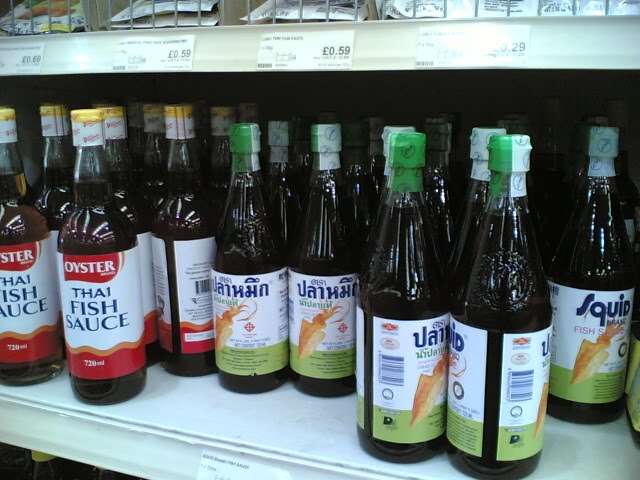
Bottles of Thai fish sauce.

The Chinese call it Fish Sauce, Nuc Mam in Vietnam, Bagoong or Pitis the Philippines. It is also used all the other Southeast Asian nations. During my year on the Mekong River during the Vietnam war I can attest that the most remarkable pungent awful smell that came from the riverside factories where fish was dried and then fermented into Nuc Mam. The smell was overpowering even if you were miles away. These drying and fermentation factories were always well away from any villages.

Tuesday, May 4, 2010

The joys & sorrows cooking: Memorable dishes & duds.

As most things, cooking is a mix of good, bad and occasionally wonderful experiences. Over the past few months I have been making soups, they are welcome when the weather is cold and they are very adaptable when the time of the dinner hour is not easy to predict.

There are more tricks and tweaks to making soups than I know and as often as not my efforts were disappointing. Some reasons for this are not understanding all the ingredients, not having the right stock or knowing how to finish or served the soup properly.

Two recent disappointments involved red lentils and pearl barley. In the first case I had no idea that red lentils are the most elastic and greedy legume. You soak them for a time before cooking and yet they seem to grow and absorb all the moisture in the pot. A small amount of lentils has an endless and insatiable thirst. Mo matter how much stock, water or wine I added to thin the pot of red lentil soup, the little beggars sucked it up. It was a tasty but very thick gruel of lentils and vegetables. Finally in desperation I called a friend from India where red lentils are much in use. He said dump a pint of whole milk yogurt into the pot. I did and end up with a very rich thick but at least more or less liquid result.

Another dud was attempt to make a very old fashion Scotch Broth. This soup, after the legendary Haggis, is Scotland's number two national dish. The name, Scotch Broth is ironic since it is a very thick and hearty soup, indeed almost a stew. Broth is very definitely something it doesn’t resemble at all. That is the Caledonian joke in the name. Now in this dish the ingredient that is critical is pearl barley. I remember that my grandmother often used it in her soups and so did a couple of the simple Italian American restaurants where we went on Sunday afternoon for two hour long dinners.
At the bottom of the soup bowl was a layer of soft chew round grains of pearl barley and they made the otherwise ordinary minestrone or vegetable soups richer and more interesting.

Now the trouble with this beloved ingredient is estimating the right amount of pearl barley to put in the soup. On my first attempt I followed the recipe and it clearly was not enough. It was so not enough that I poured in another batch of what the recipe called for. Well half an hour later the scotch broth became a gruel that would hardly allow the ladle to move it around. Oooooops.

This week I am going to try to make Hungarian “Hangover” soup which is, if I get it right, a very zippy bowl of paprika rich cabbage, sauerkraut, vegetables, sausages and chicken broth. This tangy soup is one of my favorites at a local Magyar bakery restaurant. I’ll let you know how it goes.

- xxx -

Wednesday, April 21, 2010

Guilty Pleasures

Some thoughts on hamburgers.

OK, I know anybody with the slightest pretense to being a gourmet, a serious food thinker or a civilized human being is supposed to recoil with horror from most if not all chain produced burgers. In general I do, but like most people there are some chain products that I will enjoy on the quiet

a. McDonalds still have the best fries, always have. The Big Mac is a disgrace but their Angus Burger is compared to the others not a bad burger. I’m talking about the “plain” not tarted up versions. Not bad, especially for the money. The other burgers range from misses to lousy. However if there is a place besides the fries that McDonalds delivers the goods it is at Breakfast, the egg mcmuffin is pretty good and the sausage and egg biscuit is good, if you omit the cheese which doesn’t add any taste and in my opinion is like a gooey plastic.

b. The Wendy’s basic hamburger is not bad at all, in fact it is probably the best big chain burger of the lot.

c. OK here it comes, I’m now and always have been a sucker for Carl’s Western Bacon Cheese Hamburger. There I said it and it’s true. The basic “$6 Burger” is better than most. I don’t think the other hyper burger versions are as good and most of them go from decadent to insane sloppy feats of shameless gluttony. The one that oozes all over the lovely Padma is out and out pornography saying telling us more about the Indian beauty than the sandwich. The Famous Star is a good burger, almost as good as Wendy’s classical basic burger.

d. Jack in the Box make a Sourdough Hamburger that is almost as addictive as the Western Bacon Cheese Burger. This is the west coast take on the classic Paddy Melt which is on rye with swiss or provolone. The other thing I admit to liking at Jack’s is their Super Taco which is pretty damned good for a bunch of gavachos from San Diego.

e. Burger King is number two in the chain world. They are in second place for good reason. As Winston Churchill said of his counter part across the House, Clement Attlee, “He is modest man with a lot to be modest about.” I can’t summon up the slightest guilty pleasure for anything on their menu. This is odd because almost every other chain has something they do well, Wendy’s baked potatoes, Del Tacol’s Fiesta Salad and real English Tetley's brewed ice tea with real lemon wedges -- just two examples. And it’s not that they haven’t tried innovations. They have and all were duds.

f. In’n Out. Sure the burger is good, but for me I wish it was bigger by about half. I don’t like the double double, but I would like the regular burger to be bigger so one is enough.

g. I have only had one Sonic Burger and was surprised, but I don’t know enough to say more than the place is different and warrants further study. Some people I know who spend time in the Central Valley swear by Sonic as the Prince of chain burger joints. It does have real Texas attitude.

h. Finally, what can I say about Tommy’s Chili Burger? It is an dependable old friend and a soul soothing bit of real LA. It doesn’t need any cheese. If you don’t like it, then move to Seattle and live sunless in the gray mist under gloomy dripping conifers and drive a mud spattered Subaru down the clammy streets and endure the musty smell of wet wool sweaters and over roasted coffee fumes.

Pax vobiscum. (Catholic for Aloha, Shalom and Salaam)

- xxx -

Monday, April 19, 2010

The seasonal return of Green Corn Tamales

>Well, even if we still have a couple rainy days coming up next week the wet half of LA’s two season climate (wet & dry) is almost over. This morning one of the surest signs appeared, not a robin on a branch but an e-mail from El Cholo that Green Corn Tamales will return to the menu on May Day. ¡Fantastico! !Viva El Cholo!
>
>Sure, Alice Waters and Wolfgang Puck do great things, but this is one of LA’s greatest and most beloved comfort foods, like a double dipped beef sandwich at Phillipe’s or a Tommy’s chili burger on the way home from a pub crawl. It is like bacon and eggs at the Original Pantry, a Pastrami Sandwich at Langer's or a Chili Dog at Carnies.
>
>The green corn tamales are simplicity itself. They are fresh sweet white corn kernels mixed with chilies and sweet salty white cheese encased in masa dough, wrapped in dried corn husks and steamed until all the ingredients melt into a sweet fresh soul caressing wholeness.
>
>Of the original El Cholo on Western Avenue down near USC and the other new locations I prefer the one in Pasadena. The original has a great bar but the chaotic cluster of dinning rooms and the often brusk “tourist trap” service and the crowds put me off.
>
>
>The one thing about El Cholo besides being LA’s oldest Mexican Restaurant is the reality that it is family owned and even more is very much a kitchen that still cooks in the style of the family’s Sonora heritage. The Green Corn Tamales and a number of their signature dishes are very authentic Sonora cooking. The piled up not rolled enchiladas and the choizo tostada for example are also Sonoran as are the pinto beans.
>
>When you need soothing affirmative comfort food, I commend El Cholo and the Green Corn Tamales, a bowl of guacamole prepared table side and a bottle of cold Dos XX and what more could you want.
>
>- xxx -

Saturday, March 20, 2010

St. Patrick’s Day recipes & tips


Green Salad


The salad dressing recipe was from a British web site adapted with my memory of smooth house dressings at Robaire’s French Restaurant. The almond oil was from Robaire's. The turmeric was added for color.


half a cup of sherry vinegar

one cup of olive oil

half a cup of almond oil

tablespoon of Dijon mustard

salt & pepper

tablespoon of dried parsley

teaspoon of dried chives

half teaspoon paprika

half teaspoon of turmeric


Whisk together and set aside for at least four hours.


The salad was butter lettuce and mixed organic greens served with Asparagus and pickled beets and onions

The asparagus were trimmed, cooked in boiling water then blanched in ice water. The beet salad was simplicity itself, two cans of pickled beets with two small red onions thinly sliced. After four hours, the pickled beet juice mellowed and turned the onion bright red.


The Corned Beef


Many years ago sitting at the counter at Langer’s Deli near downtown LA, my wife and I talked to one of the cooks and he told us how to cook corned beef at home. At Langer's they put the corned beef into steam cabinets that hold the meat at about 190 degrees for six to eight hours. The key to keeping it tender and juicy is never to let it boil.


At home a crock pot is ideal to match this deli slow cooking. Ten hours before dinner put two pieces of corned beef about 4 pounds each into the crock pot plus a quarter cut of mixed pickling spices. In my family we pour in two cups of Apple Cider vinegar or if you have it black malt vinegar. The cider vinegar give a bit of brightness, the malt vinegar is strong and sweet. Then fill the crock pot with cold water up to half an inch of the rim, cover and put on low. Turn the meat two or three times during cooking. When the meat is done (usually around eight hours) you can turn the crock pot off.


To cook the vegetables take about half the cooking water from the crock pot and ladle it into a large pot and add water to cook the carrots, parsnips, turnips and onions and potatoes and cook them on the stove. Bring to a boil and then let simmer until they are cook to your taste. The old country Irish cook them soft, but today most of us prefer them with some texture but not Al Dente. This is up to you.


Tips & suggestions


Don’t peel or cut the onions, the skins will come off and the whole onion will not fall apart while cooking. While you are carving the corned beet put in a whole cabbage cut into eighths, or quarters if you have two small cabbages. Do not cut off the core. It will hold the cabbage wedges together.


Serve the sliced corned beef on a platter along with a platter of the vegetables.


I use an electric knife to do the slicing. Since very few home cooks have professional grade knives or the skill to keep them sharp, the electric knife is the most reliable way to carve the meat. They are less than $20 at Target. Emeril Lagasse , Elton Brown, Bobby Flay and other Food Channel headliners recommend them for home kitchens.


To be traditional small white rose potatoes would be cooked with the other root vegetables. Parsnips and turnips are optional, but traditional in Ireland if you have them. In Irish slang Turnips are called “nips” while potatoes are called “spuds” or “praties" (pray'tee's). Most Irish families serve horse radish and mustard with the corned beef.


Tastes vary widely but I served the corned beef with a hot sweet Russian style mustard, a strong German style mustard and a whole grain Dijon mustard. Gulden's Spicy Brown or "Chicago Style" mustard is not surprisingly very close to tangy German Mustard. In Ireland they use Coleman’s English Mustard which is very very sharp, too sharp for American taste. But you can find Coleman's in most supermarkets is you want to be authentic and fearless.


In Los Angeles, we have a famous and ferocious local mustard, Phillipe’s house made mustard is available at the restaurant by the jar. This summer a French college student we took there told us he loved the mustard and the double dipped beef made him feel at home. He was from Grenoble and I later discovered so was the founder Phillipe. The sandwich is not called the "French Dip" for nothing. The name of the place should be pronounced Fil-LEAP in the French manner, but this being LA we pronounce it like the Spanish Filipe. ¿Porque no?

St. Patrick's Day and our Corned Beef dinner

The St. Patrick's Day menu of corned beef and cabbage is an American traditional meal like the Turkey Dinner of Thanksgiving Day, the grilled hot dogs and hamburgers of Forth of July and the barbecue with potato salad lemonade and watermelon on Labor Day. There are also other regional or national ethnic festivals like Cinco de Mayo with tacos and margarita, Columbus Day with Spaghetti and meat balls, in Chicago and the Midwest you have von Stueben Day with bratwust and Beer and Pulaski Day with kilbasa and beer, in Texas you have June Teen with big day long family barbecues and soul food, and Puerto Rico’s national day with the big parade and pork sandwiches in New York. There are of course many many other local or regional ethnic festivals like the sequence of Holy Ghost Festivals in small towns in central California with boiled beef dinners and other dishes brought from Portugal’s Açores Islands, the annual Lutefisk Dinners in Minnesota’s Scandinavian Parish Halls, Crab Feeds in San Francisco, Shrimp Boils in Louisiana and the Gulf Coast, Lobster Boils in New England and cedar planked salmon in the Pacific Northwest.


Like the Turkey Dinner, the Corn Beef and Cabbage dinner is American. While identified with the Irish and Jews, neither group ever ate the stuff in the “old country.” In Ireland a dinner of cured pork shoulder was the tradition while corned beef didn’t exist at all in Poland’s Jewish communities. However, both adopted this American product when they got here. Both today consider it their favorite party meat. The only significant difference is that Jews often add cloves of garlic to the cooking water for an extra bite. The Irish don’t add garlic.


As close cousin of the Corned Beef & Cabbage is New England Boiled Dinner. Not much seen here in California, in this meal corned beef is replaced with a pork shoulder ham often called Picnic Ham. Otherwise the dish is much the same with potatoes and a number of root vegetables, onions and cabbage. My Grandfather Mellow preferred this to corned beef, he didn’t like because it got stringy and got caught in his teeth. My Grandmother made this often in winter. Although born in California herself, her parents were born in New England and brought this recipe with them.


We had a St. Patrick's Day dinner the saturday before and followed the tradition with one exception, one of the couples are great fan’s of my late wife’s home fried potatoes which we made instead of boiling them root vegetables. The other California change to the menu was a big green salad served with pencil thin asparagus which had just come into season and was a real delight. In my family we always preferred the thin fresh asparagus to the thicker stalks restaurants seem to prefer. The thin ones are more tender and more vibrant in flavor.


In the next post are cooking tips and recipe’s for our version of the St. Patrick's Day meal. And so until next year, ERIN GO BRAGH -- Ireland forever in the Gaelic. That is one of the two Gaelic phrases most American Irishmen know, the other is Pos’ ma hone! -- kiss my ass.


Friday, February 12, 2010

Southern California slow smoked brisket.


When you need a lot of meat for a party, a whole brisket can do the job.


At most wholesale grocers whole briskets are available in seal plastic bags.


They weight fifteen to twenty pounds.


Mixing steps from a cluster of styles he’s how I do it.


1. Marinate the meat in the plastic bag. I prefer malt vinegar which gives a rich, dark but slightly sweet bite to the meat. I put a cup of pickling spice into the sack and rub it onto the meat. Next I pour in the malt vinegar -- available at Smart & Final and other wholesale grocers in gallon jugs for less than ten dollars. I seal the bag up with clips and set it in a plastic bag. I marinate it for two or three days, turning it a couple times each day.


2. Prepare the meat. Take out of the marinade and dry with paper towels. Then I rub on crack pepper, but not too much. To fit my smoker, I cut the brisket in half.


3. Prepare the smoker. fill the fire pan with charcoal and light it off with kindling or start the fire in a metal charcoal lighter. Fill the steam pan with water and sliced oranges and lemons. When the temperature gauge reaches midway into the cooking range, add the meat and cover.


Every three or four hours you will need to stoke the fire with additional charcoal and check the level of the steam pan and add water if low.


4. After twenty four hours the meat will be ready. The slow wet smoke will have melted most of the fat but not dried the meat like a dry smoker would. Take the meat out and allow it to rest twenty minutes to half an hour. I use an electric knife to slice the meat and put it on platters. Tent with aluminum foil until ready to serve.


5. Serve with mild and sharp mustards, house radish and sour dough and rye bread.


6. Side dishes that work with this are a potato salad, a tart cole slaw, a selection of pickles, olives and peppers.


Notes: A native Californian, I favor wet vinegar based marinades. In Texas and the South they prefer dry rubs and often apply them a day or even two before cooking so they can work into the meat.


When the meat is put into the smoke make sure the fat side is on top.


The sharp yet sweet malt vinegar gives a richness to the meat that a wine or apple cider vinegar does not.

Friday, January 29, 2010

Every now and again, a home run.


Over the past couple years there have been a few times a dish knocked my socks off. Here is list in no particular order:

Wolfgang Puck did at his Spago in Beverly Hills, he served a chicken soup with winter vegetables made from a recipe he credits to his Grandmother. This bowl of soup was as perfect as the music created by Salzburg's other Wolfgang, Herr Mozart. The broth was rich clear amber essence of chicken and herbs accompanied by perfectly cooked root vegetables. Amazing and humbling to see somebody reach perfection with transparent simplicity. It was simple but absolutely as perfect as the first act of the Marriage of Figaro or the Ave Verum Corpus.

At the Spago in Caesar’s Palace Wolfie did it again, this time with something his Grandmother never made but mine did. This was a soup of clams and spanish chorizo in a white wine and tomato stock. While his recipe may be based on Basque cooking, it was all but identical to my Grandfather’s favorite Portuguese soup. The briny chewy perfectly cooked clams contrasted with the rich paprika and garlic smoked hard chorizo, the white wine mixed with the clam juice and the olive oil sautéed sofrito of onions, garlic, mild peppers and tomato make a bold savory but direct dish of warmth and depth. A perfect rustic marriage of the land and the sea. And he served it in a large iron pot with a big basket of crusty bread.

Another home run was served at Marin Joe’s on the 101 near San Raphael. This was a large platter of sweetbreads sautéed with mushrooms with wine, onions, herbs and sweet peppers. Awesome. The gamy earthiness of the mushrooms was the counter point to the delicate almost ethereal taste of the sweetbreads while both were bound together by the sherry enriched sauce of herbs and vegetables. Served with big crusty real San Francisco Sour Dough bread this was a memorable nostalgic meal.

Tafelspitz -- Austrian boil beef. Photo from Wikapedia
At a restaurant called with a kitchen and front staff of Hungarians, Maxmilian’s in North Hollywood I had tafelspitz, Austrian style boiled beef for the first time in my life. It has a wonderful concentrated but light real beef flavor served with half a dozen accompaniment including, the best cucumber salad I’ve ever tasted, a zippy sour cream and horseradish sauce, and other small enhancements. I know that in Vienna all the great composers gathered for a lunch of Tafelspitz, a deep satifying meal very much like a deep nostagic but vibrant piano quartet by Brahms. Boiled beef sounds flat in English, but this is not at all dull or boring.


My daughter Mara dazzled me one morning with a magnificent “Dutch Baby” apple pancake that was as rich and velvety as an omelet and sweet and just a bit earthy with still slightly crisp apple slices. The big rich pancake overflowed the large iron skillet she baked itg in and rose with unexpected lightness. It knocked my socks off with its richness and at the same time it’s lightness. Amazing accomplishment.

Finally, I have to include the very simple old fashion sliced tongue in a white wine vinaigrette they served as an appetizer at Noriega’s basque restaurant in Bakersfield. Unexpected, very traditional to the point of being almost a historic relic, this was a wonderful dish that was great in itself and even more an example of real authentic traditional cooking that we should appreciate and seek out much more often. Tongue today is very much an old fashioned item, rarely seen outside those unyielding ethnic cafe like Noriega’s and the other Basque restaurants and in authentic Mexican places where lingua is served and authentic means they cook with Manteca (pork lard) and they got to show you no stinking badges. Not even all Jewish deli’s still serve tongue.

- xxx -

Saturday, January 23, 2010

Balsamic this, balsamic that, so much hooey!

What is it with balsamic vinegar? It shows up in everything. A little saucer with a splash of black pungent balsamic vinegar under a quarter cup of olive oil is the first thing set on the table and unless you are lucky some sort of balsamic sorbet will be the last thing set before you. What is it? It is a long time and esteemed local specialty of Modena Italy. Until it became the vinegar to end all vinegar's, it was a thick sweet caramelized long aged product that played a role in Italian cooking very much like Worcestershire Sauce played in American cooking. It added a savory bass note to dishes and gravies, a few drops went into a Caesar Salad, a few more into a Bloody Mary.

Now it appears in everything and anything. A while back it was kiwi fruit that showed up in all the expected places and in the damnedest places too. Balsamic vinegar has some great uses, but it is not the elixir of love.

Lets talk about vinegar's. There are lots and lots of them and unlike Balsamic most of them are great in salads and other things too. To begin there is red wine vinegar and its twin, white wine vinegar. These are meant to dress salads. The more rustic and Mediterranean, the more it cries out for a good red wine vinegar. The more refined and delicate salads like Bibb or Boston lettuce call for a more refined white wine vinegar. The classic french dressing calls for red wine and olive oil with a bit of salt and pepper and a teaspoon of dry mustard and sweet paprika. A more elegant Parisian Dressing calls for white wine vinegar and olive oil salt pepper and a healthy spoon of smooth Dijon mustard to give tang and emulsify the dressing. Seafood salads call for a tarragon white wine vinegar. Other salads need the robust dark richness of a Sherry Vinegar from Spain, something that is used more in main dishes than on salads where it tends to overwhelm.

There are other vinegar's, for example apple cider vinegar, an amber acid with a hint of apple sweetness, malt vinegar used mainly in the British Isles where its rich sharpness and hint of malt sugar gives a robust bite. In Asia rice vinegar's are the staple, they combine a sharpness with a mild slight sweetness. They are available in their natural state or seasoned and slightly sweetened. These seasoned rice vinegar's are mild enough to dress a salad alone, no oil need which is very useful if you are watching calories.

The one fine vinegar that has fallen out of favor and I regret is tarragon vinegar. In the USA it is usually made with apple cider vinegar, which gives an earth Midwestern flavor. The best Tarragon vinegar's from France and Italy are white wine vinegar's that have a large sprig of tarragon in the bottle to infuse the musky herbal flavor. The one place they are absolutely and vitally necessary is in seafood salads, especially calamari or octopus salads. This is the perfect herb to bring out the subtle briny essence of these particularly ugly but wonderful tasting creatures.

Friday, January 22, 2010

Four Favorite places in Santa Barbara


There is a German saying, “Happy as God in France.” In California we don’t think He would prefer France, but as a writer once put it, “God would live in Santa Barbara, if he could afford it.” When the town was devastated by a major earthquake in 1925 the city fathers decreed that in rebuilding they would do it in a Spanish Colonial Revival style and so we have the city we know today, a west coast Williamsburg where even McDonalds and KFC’s look like 18th century Mexican bodegas and the courthouse looks like a Viceregal Palace. Hundreds of Mexican revival villas and haciendas dot the landscape. Montecito is home to millionaires and Oprah Winfrey with oak trees, stables, formal gardens and the musty smell of old money or barely dry ink aroma of crisp new money.

Far beyond what you might expect in a city its size, Santa Barbara is a center for innovative and traditional restaurants, food stores and bakeries. This is not a review, just quick a summary of places my family likes a lot. There are at least a dozen more I could and should mention. They will get their turn later.

The Summerland Beach Cafe is a small Victorian house with terraces around it. Only open for breakfast and lunch, it does very well thought out California dishes and serves them cheerfully in a welcoming ambiance. Organic, pretty much. Vegetarians are welcome, but they also make a near perfect club sandwich on whole grain bread and make a huge selection of sandwiches, hamburgers, salads, omelets and egg dishes. Even the side dishes like their potato salad, onion rings, cole slaw and garnishes show imagination and nice but not fussy flair. Breakfast or lunch here is our customary first stop on a long weekend or mini vacation in Santa Barbara where sitting in the sun looking over the 101 freeway at the Pacific begins our decompression.

Another favorite is Anderson’s on State Street, a Danish bakery and restaurant that serves breakfast, lunch and dinner. The bakery is exceptional and has wonderful breads and then pastries that show what very gifted mortals can do with butter, marzipan and skill. They make their own off the chart good orange preserves and raspberry preserve too. They even offer a real Danish breakfast -- no eggs, just a platter with two kinds of rye bread, a huge slice of homemade liver pate, a pile of sweet and salty Danish ham, slices of dill Havarti cheese and some garnishes and samples of their breakfast pastries. Phenomenal. This is usually our last stop where we buy bread, pastries or tubs of fresh fruit preserves to take home.

Not far away is Ca Dario, a small Italian restaurant with a Venetian accent. Lunch there can be a celebration of life. A soup of local shellfish in a briny broth, a platter of homemade zesty Italian sausage & peppers with fried polenta. At night, they serve a striped bass that is magnificent.


Above, the striped bass, below the artichoke salad. Photos by Mara Kelly

Take your time, it is small and often jammed. It is not a red check table cloth ItaloAmerican cafe, but very very much like a cafe in the Veneto, the most cultivated and orderly region of Italy. You would do best to eat a bit later than usual to avoid the meal time tides. Ask the servers about the menu and the day's specials, Ca'Dario is full of unexpected and authentic surprises like their cold artichoke appetizer which is unique and the best salad that doesn’t look like one since the Spanish invented gazpacho.

Finally, there is Cafe Buenos Aries (It originally occupied the small place where Ca Dario is now). My late wife loved this romantic place, especially at night when latin music and tangos were playing and candles and tiny lights lit the courtyard. This is a large restaurant you enter through a courtyard with arcades on two sides and outside fireplaces. The dinning room is tile floored and feels like it has been there a hundred years. They mix all the great national cocktails of the Americas (mojitos, caipirinhas, pisco sours, margaritas and more). They then serve steaks that are either flown up from the Pampas or cut locally in the Argentine manner. These are served with perfect fried potatoes and chimichurri, the herbal tangy national condiment. Romantic is the only adjective.

Andersen's Danish Bakery & Restaurant
1106 State St
Santa Barbara, CA 93101
(805) 962-5085
www.andersenssantabarbara.com

Ca' Dario
37 E Victoria Street
Santa Barbara, CA 93101
(805) 884-9419
www.cadario.net

Cafe Buenos Aires
1316 State Street
Santa Barbara, CA 93101
(805) 963-0242

Summerland Beach Cafe
2294 Lillie Ave
Summerland, CA 93067
(805) 969-1019

Thursday, January 14, 2010

In Glendale, tastes from the Balkans & Buenos Aries

Elena's

One hidden away gem is a little place on Glendale Avenue called Elena’s. Run by a couple of Armenian ladies, this little place serves what my Bulgarian friend Boiko says is real Balkan soul food. The style is a mix of Greek, Turkish & Armenia staples that is not dumbed down for American taste. A great favorite with the LAPD from the near by Northeast Station and the local Glendale cops too, Elena's offers wonderful simple healthy food in a combination of Greek, Armenian, Turkish and Lebanese styles. All the dinner plates come with either a bowl of soul filling lentil soup or a very nice salad of lettuce tomatoes, onion, herbs and a vinegar lemon juice dressing that is just sharp and zesty enough to set off the vegetables. The following dinner plates are a large serving of rice pilaf with a grilled Anaheim pepper and a grilled tomato with onions and a side dish of pickled cabbage and other vegetables that is sort of mild Balkan take on kimchi. On this generous plate you can get various kabobs: chicken, lula, beef, lamb or a combination of them plus felafel, stuffed egg plant, stuffed grape leaves and a few other meatless dishes. The meats are well seasoned in the tangy Balkan Levantine way and full of zest without hiding or distorting their natural flavor. For myself, I almost always get a combo plate with one stick of lamb kabobs and the other of herb dusted chicken. While there is no beer or wine, a wide variety of soft drinks are available including the house made yogurt drink which is the prefect drink to go with the food. Finally some more good news about Elena’s is that almost all the dinners are less than ten dollars. They also have take out and also make pita sandwiches.

El Morfi

Another little place that I enjoy for its honest ethnic focus and direct simplicity is El Morfi, a block south of Porto’s Bakery on Brand across the street from the Alex Theater. An Argentine place, El Morfi (BA slang for a snack or quick bite) serves food in the unique Italo-Latino style of Buenos Aries. For example on the menu you will see “ñque” which really puzzled me until the young waiter explained it was how you spelled “Gnocchi” in Spanish. "¡ñque, ñque, ñque!" It is that kind of place.

What I particularly like there is their salad, an Argentine version of a chopped salad in a clean vinaigrette, papas Provenzale -- great french fries salted then tossed with garlic and parsley and their milanesas. The Neopalitana is a wide thin breaded beef cutlet topped with a herby marinara sauce and melted provolone and a few strips of roasted red pepper. (You can get chicken milanesas if you prefer.) There are many other dishes including pasta, pizza, empanadas and other Argentine specialties. They carry a good selection of wine and beer from “BA” and make a very flavorful house made Sangria that is not too sweet but very full of red wine character. Prices are quite fair, cheap by those used to the West Side and Santa Monica. It is a simple little place popular with both English and Spanish speakers.

And then there is the real reason to enjoy El Morfi, their home made Chimichurri. This condiment is addictive, it sings with herbs, teases with the smoothness of olive oil, it enchants with herbal complexity, and pinches your tongue with a tang and a zing. I dip bread in it, and spoon the green and golden elixir over the papas provenzale. I think I could eat cardboard dipped in. It is made in house and can be bought in mason jars and taken home. Don't miss it.

There is a story the the name Chimichurri comes from the name of Irish soldier who fought with Argentine rebel army in their war of Independence from Spain, Jimmy McCurry. Who knows? I suppose you could even say El Morfi is Irish too, a phonetic spelling of Murphy. I had an old nun when I was a child who said whenever you have a good story, there usually was an Irishman as the bottom of it.

Other places you should know about in Glendale are Damon’s, which has been there since the 1930’s. It looks like a local take on the Trader Vic’s, Don the Beachcomber school of Tiki restaurant. While it serves a wide variety of Tiki Room rum and fruit juice drinks in the grand Dorothy Lamour, Hope & Crosby “Road” pictures style, the menu is very much old time LA steakhouse. Near by is Jax’s, a bit more up scale but also long time LA steak house.

- xxx -

Wednesday, January 13, 2010

A few words about Glendale.


Glendale does not make it that often into the food blogs, however occasionally a local place gets attention. For example, not long ago the food writer of the LA Weekly discovered Billy’s Deli on Orange Street. He liked it and was surprised it had slipped his attention since it has been there for over 50 years and has been used in movies and TV series as the interior for a New York deli or old fashioned Italian restaurant depending on what ethnic decorations replace the photo murals of pre-WW II Glendale. Billy’s makes all the New York Jewish Deli standards and have well priced daily specials. When many deli’s are drifting farther and father away from their traditions Billy’s stay close to the old ways. On the hottest day of summer the year at an outlet of the Jerry’s Deli’s chain, a Latino waitress tells me that don’t served cold beet borscht because nobody but a few old guys ever ordered it. That was as shocking as finding an Irish saloon that didn’t served Jameson’s or an English pub that didn’t have Fuller’s London Pride. What is the world coming to?

Billy's, how authentic is it? One example, they serve a breakfast special of fried baloney & eggs. It is quarter inch thick slices of Hebrew National Baloney fried until there is a scorched crust. You can't get much more old time authentic than that. My daughter says it is too disgusting to even think about. Hey, but does she know about real food. I have it on good authority that President Obama likes Spam Fried Rice just like everybody who grew up in Honolulu.

Another place that I feel is unfairly omitted from most food blogs is Mario’s Italian Market on Broadway. Mario’s is an old fashioned Italian market like there used to be all over San Francisco, San Jose and the rest of the Bay Area and many other parts of the country. My daughter last year had a problem with her foot and went to see a specialist recently moved to the San Fernando Valley from New Jersey. During one appointment the Doctor said that he had not been able to find a real old time Italian Market. Mara told him he should try Mario’s in Glendale. The next time she saw him he told her, “Thanks for telling me about Mario’s. Ya’ know, I opened the door and it smelled just like I was back in New Jersey.”

At Mario’s they make dozens of Italian hero sandwiches with a wide variety of salami’s, sausages, and other cured meats on their own torpedo shaped rolls. I always ask for no mustard or mayonnaise but extra olive oil and vinegar dressing. Mario’s carries a wide range of Italian and other Mediterranean imports, anchovies, canned fish, dozens and dozens kinds of pasta, cookies, candy, olive oil, vinegar's, spices, olives, etc., etc. Personally I would rate their hero sandwiches as good or better than those at Bay Cities in Santa Monica, but that is just me and doesn’t mean that I don’t think Bay Cities is a fine place.

Billy’s Deli & Café
216 N. Orange Street, Glendale, CA 91203
Phone: (818) 246-1689 | Fax: (818) 246-3210

Mario's Italian Deli & Catering
740 East Broadway
Glendale, CA (818) 242-4114

- xxx -

Thursday, December 31, 2009

Holiday Potato Salad, with a little crunch.


This potato salad is very popular with our friends. It is based on my Grandmother Camilla Mellow’s recipe with a few innovations. It includes celery which adds a bit of crunch to the texture.

5 lb.. Russet potatoes, boiled in lightly salted water then peeled and chopped.
6 stalks Celery, including the interior ones and any leaves still attached.
3 Red onions
1 can Israeli packed brine dill pickles.
1/2 can Pitted black olives
1 jar Prepared diced pimentos, drained
1 bunch Fresh Italian (flat leaf) parsley, leaves only
2 tbs. Dijon mustard
2 tbs. Prepared horseradish
splash white wine vinegar
salt & pepper to taste.
2 cups mayonnaise
1 cup sour cream
6 hard boiled eggs, chopped or cut into in rounds -- optional

a. Wash half a pound of russet potatoes, put in a large pot of cold water and bring to a boil. Salt the water. Cook until a knife easily cuts though the potatoes. Drain and let cool enough to peel and chop into roughly half inch cubes.

b. Cut celery, onions, pickles and olives into smaller pieces then mince in a chopper until they are minced into roughly quarter inch size pieces. Chop the parsley leaves fine. Put all of these into a large mixing bowl with the jar of drained pimentos.

c. To the chopped vegetables add the Dijon or other sharp mustard, the horseradish, then add the cubed potatoes and mix evenly. Then add the mayonnaise and sour cream and mix again. Begin with one and half cups of mayonnaise and the sour cream and add just enough to make sure it is evenly mixed. Taste the salad and salt and pepper to taste and add a splash of white wine vinegar or fresh lemon juice to cut the richness. Be cautious with the salt since the pickles, mustard, horseradish and mayonnaise already bring a lot of salt with them. My Grandmother always used white pepper in her potato salad and her mashed potatoes as do most Europeans. The favor is sharper and does not put black flecks into the white mixture. Cover and chill for at least four hours.

d. Before serving taste the salad and add more mayonnaise it it seems dry.

Notes:

-- Only use jarred prepared pimentos, do not use roast red peppers because they bleed into the potatoes and turn the salad pink.

-- The sharp mustard and horseradish add high notes to the taste and they should not really be tasted, use just enough to give the salad some bite. The same with the white wine vinegar or lemon juice, they liven the flavor but you should not be able to taste either. Do not add the brine from the Israeli pickles, it is far too salty. If you use a vinegar cured pickle, you might want to use it's juice instead of white wine vinegar or lemon juice.

-- The very menschlich (manly in German & Yiddish) Israeli brine pickles are strong, salty, zippy, garlicky and make a real difference and cut the sweetness of the potato mayonnaise flavor of the salad. Other deli type pickles or sour dills also work. Some people use sweet pickles or pickle relish and like it, but I feel the tangy salty ones contrast with the potatoes and make a lively salad. A few times I have used French conrichons which are pickled in wine vinegar and seasoned with tarragon. It makes a sophisticated salad some people will like.
Red onions mellow out in the salad and do not have as sharp a flavor as white or brown onions. Green onions are too assertive and like dill weed tend to overpower the other flavors.

There are many other fine potato salads including the herb rich French and Italian ones where the dressing is white wine vinegar & olive oil, not mayonnaise, and the warm bacon and apple cider vinegar German potato salads. Even Asians make a mild creamy potato salad that you will find with Hawaiian cooking or as a side dish with a robust chili seasoned Korean Barbecue.

Once when I realized I didn't have any celery I took a can of water chestnuts and chopped them and added then to the salad. It provided the need crunch and blended in well.
- xxx -